
CLOSE
Search for “” keywords, total search results
CLOSE
Search for “” keywords, total search results
2026.September
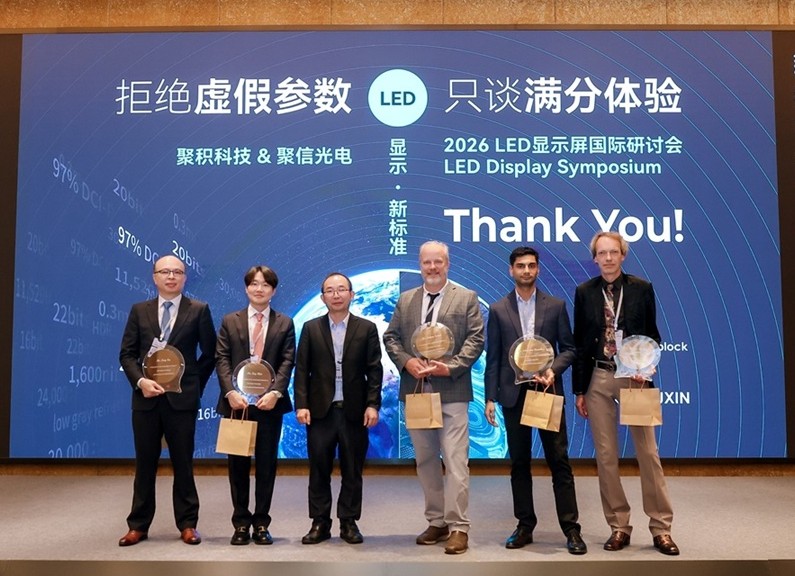
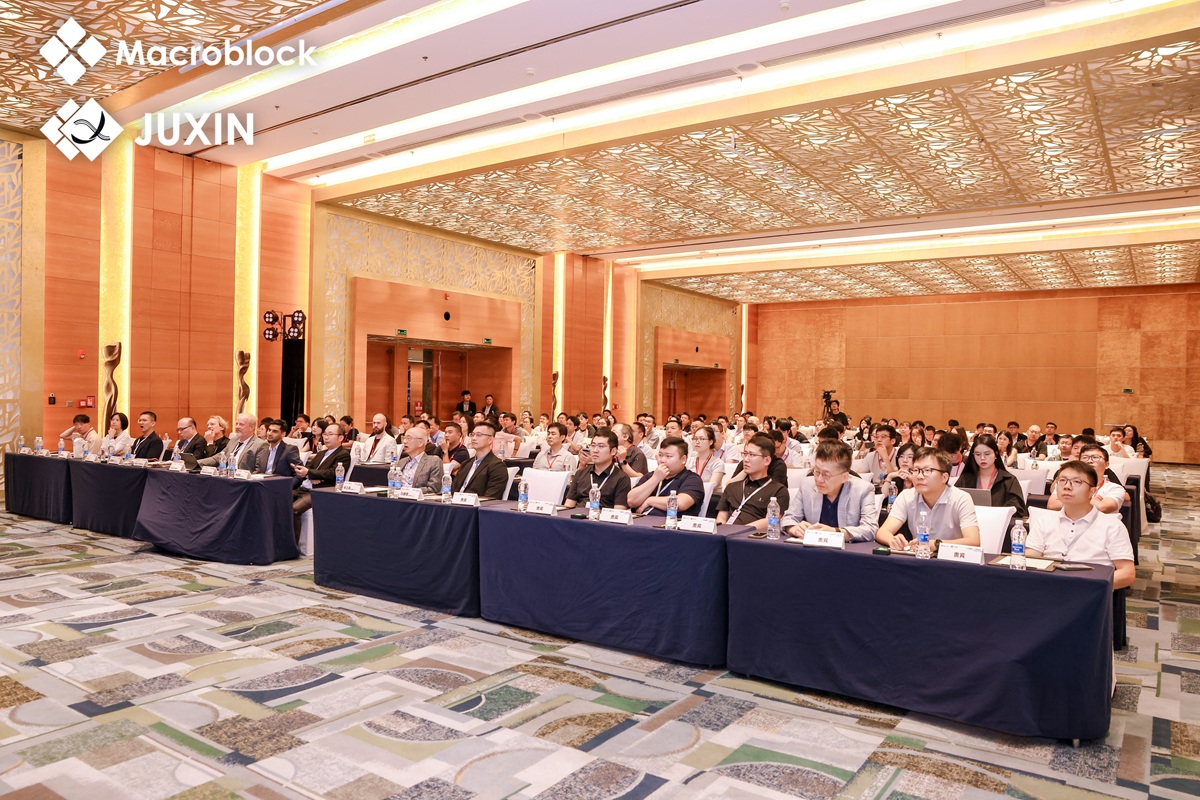
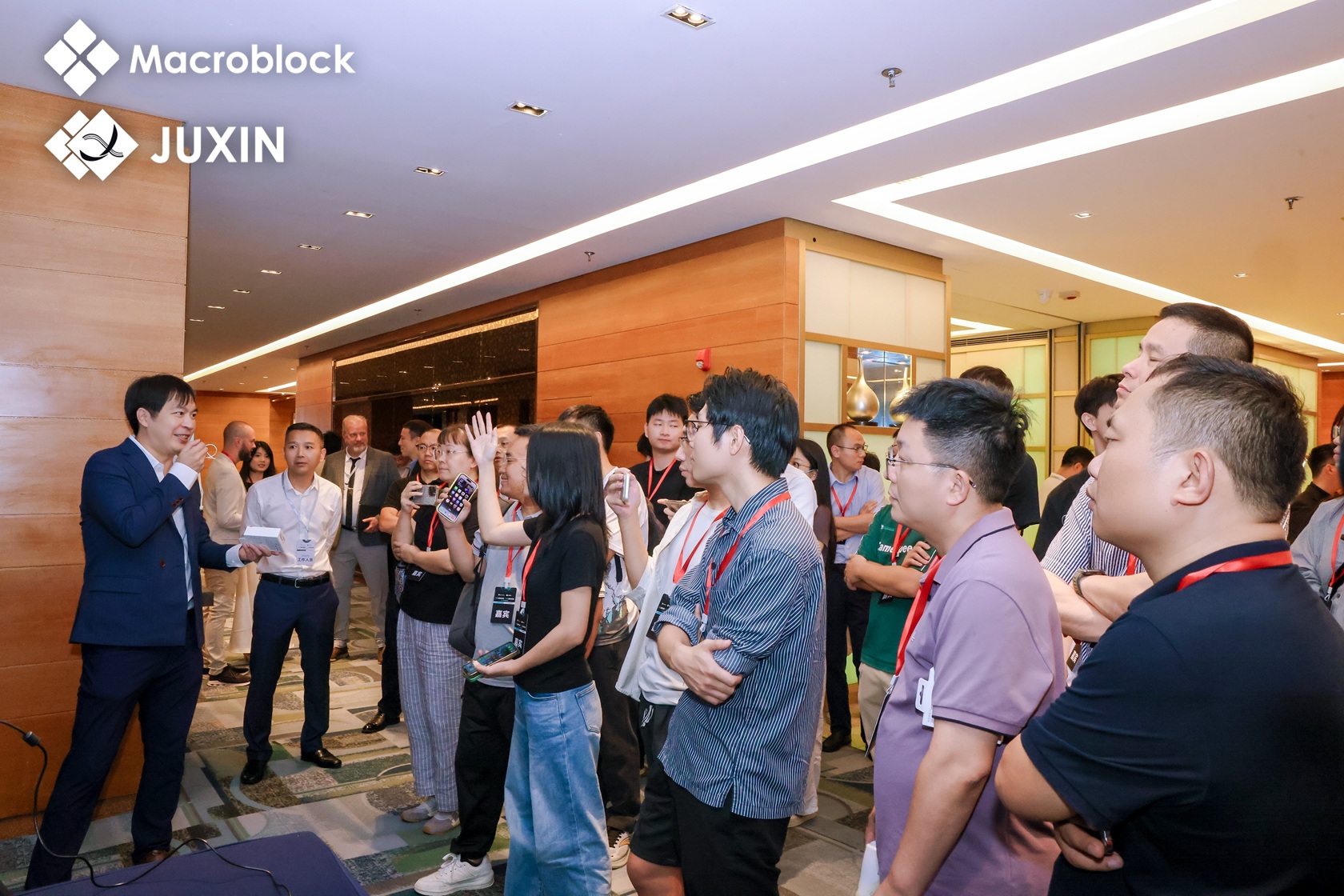
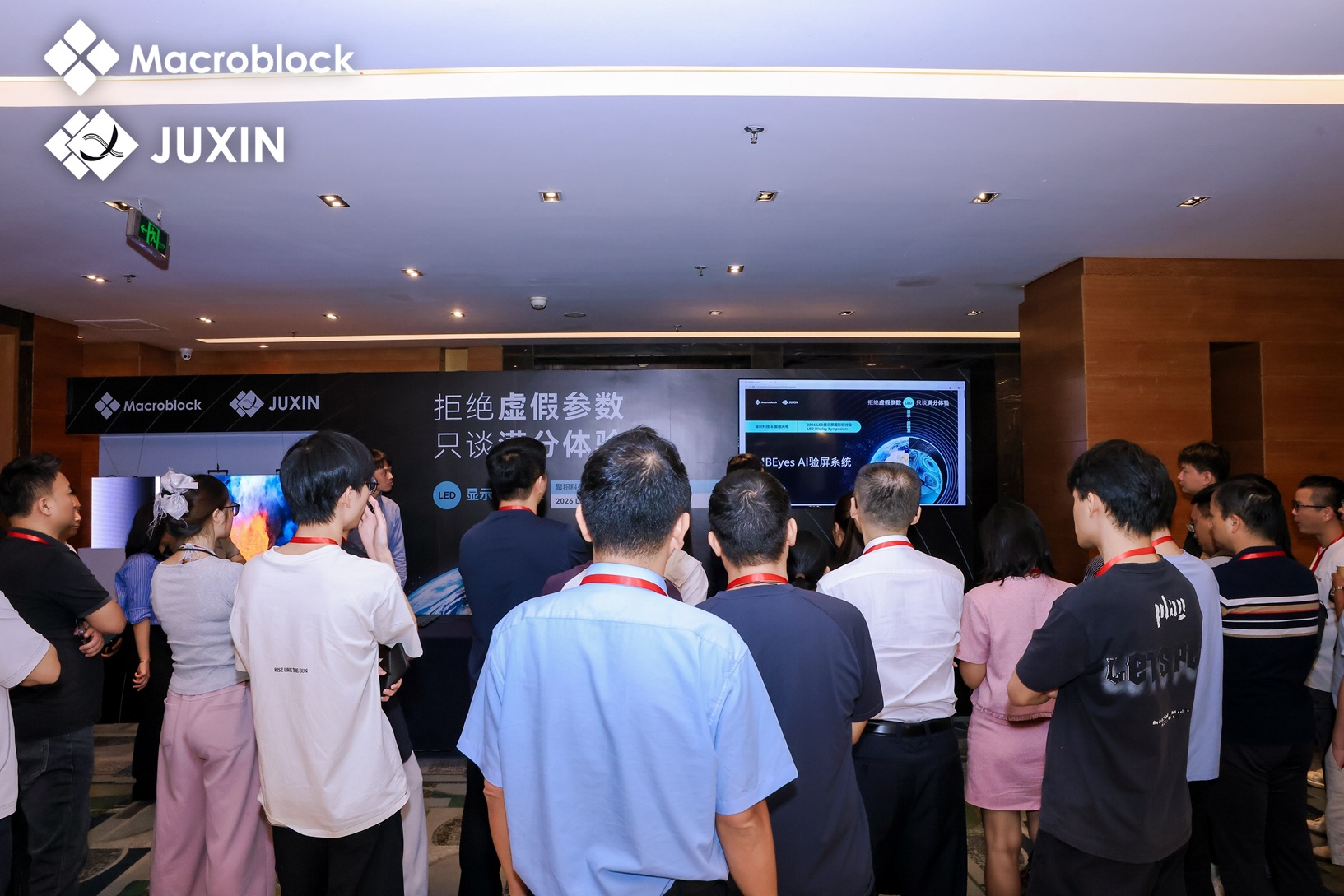
On September 10, 2026, Macroblock and Juxin jointly hosted the 2026 International LED Display Symposium under the theme “No Spec Hype. Just Perfect Experience.” Industry experts gathered to discuss the direction of the next generation of LED displays. A clear consensus emerged among the speakers: the LED display industry is moving beyond the traditional race for specifications toward a new era defined by experience. Market value will increasingly be measured not only by numbers on a specification sheet, but by what users can truly see, capture on camera, and experience.
In opening remarks, Macroblock General Manager Jack Lin noted that the LED display industry has long focused on comparisons of brightness, grayscale, and refresh rate, often overlooking real-world applications and end-user experience. With the rapid growth of fine-pitch displays, virtual production, and image-driven communication through social media, competition is shifting from hardware specifications to experience, establishing a new set of evaluation criteria that goes beyond specifications and better reflects real-world visual performance and user expectations.
Omdia: The Shift from Specifications to Experiences
Tay Kim, Head of ProAV Research at global market intelligence firm Omdia, explained that LED has become the fastest-growing display technology in the professional display market. The key growth driver, however, is not specifications alone, but the immersive experiences LED displays create for enterprises, retail, stadiums, public spaces, virtual production, and entertainment venues.
Audiences do not remember pixel pitch or brightness figures; they remember the impact and engagement created by the content. From Sphere in Las Vegas to virtual-production environments worldwide, LED displays are evolving from display devices into experience platforms.
AMiP: AM-MiP Boosts the MicroLED Display Ecosystem
AMiP executive Troy Hsu presented advances in AM-MiP (Active Matrix MicroLED in Package), marking an important transition for MicroLED from passive to active-matrix driving.
Compared with conventional MiP solutions, AM-MiP can reduce drive current by more than 40 times, more than double luminous efficiency, and support 16-bit grayscale, HDR10+, and Dolby Vision. AMiP has also established nine core technologies—including mass transfer, advanced packaging, Black Matrix isolation, and AI mixed-bin processing—to improve uniformity, yield, and production cost. Looking ahead, glass-substrate LP-MiP (MiP on Glass) technology is expected to accelerate adoption of ultra-large, high-resolution MicroLED displays across commercial displays, virtual production, gaming, and home theater.
Stereyo: Bridging Driver IC Capabilities and Next-Generation Display Architectures
Robbie Thielemans, founder of Stereyo, introduced a novel approach to next-generation display architecture, emphasizing that display quality should not be judged solely by technical specs such as brightness, color coordinates, or bit depth. Instead, evaluation must return to the optical performance perceived by the human eye and captured by cameras. Because visual results are simultaneously influenced by spectral characteristics, luminance uniformity, contrast, temporal response, viewing conditions, and temperature fluctuations, the phenomenon of "identical specs producing visibly different images" remains widespread in practical applications.
To enhance display consistency and image fidelity, Robbie proposed a comprehensive video processing architecture spanning content processing, temporal calibration, thermal compensation, and driver-side non-linear correction. He stressed that calibration must be deployed directly at the precise source of error to achieve superior color precision, grayscale accuracy, and dynamic performance. This technical framework is particularly tailored for virtual production, broadcast studio displays, MicroLED, and active-matrix display systems, setting a strategic design direction for next-generation, high-end LED displays.
Macroblock: Displays × AI—The Making of MBEyes
Beyond technical advancements, establishing objective and consistent quality standards has become a central focus for the industry. At the event, Macroblock Business Development Manager John Tsai presented "MBEyes," an AI-driven display inspection system. Powered by Macroblock's custom-developed AI image analysis algorithms, MBEyes automatically identifies bright lines, dead pixels, block non-uniformity, Mura, and other visual defects, establishing a quantitative scoring mechanism and graded verification system.
MBEyes not only alleviates the heavy burden of repetitive inspection tasks for LED display engineers, but also holds the potential to build a unified quality communication standard for the industry—shifting LED display quality evaluation from subjective perception to objective verification. The platform allows users to select corresponding quality indicators tailored to diverse application requirements, such as outdoor concerts or virtual production, thereby minimizing subjective discrepancies. With MBEyes as the core framework, Macroblock aims to resolve long-standing inspection pain points in the LED display industry and establish a fair, impartial, and standardized quality verification language for the next generation.
Thor AV: Buy Your Second LED Wall First
Thor AV CEO Stefan Svärd used the analogy of buying a recreational vehicle to show that specifications and price do not equal user experience. Investment in an LED wall should be assessed according to its application and long-term stability.
End customers are not buying a set of brightness, pixel-pitch, or refresh-rate figures. They are buying a system that must deliver stable content over years of use, during public events, and on camera. Natural skin tones, accurate color, low-grayscale detail, uniformity, and images free of flicker, banding, and scan lines are what matter most.
Long-term maintainability—including thermal stability, batch consistency, calibration, spare-parts strategy, and serviceability after five years—is equally important. Total cost extends beyond purchase price to energy, calibration, labor, downtime, early replacement, and reputational risk.
While a 1/24 scan rate keeps costs down by sharing a single driver channel across 24 rows, a 1/12 scan cuts those shared rows in half, utilizing more driving resources to improve grayscale and refresh rate performance, making it the premier choice for camera shooting. Even with the same camera, processor, and listed specifications, panels can produce visibly different results.
Stefan emphasized that LED display buyers should treat the LED, driver IC, MOSFET, controller, calibration, camera, and audience as a single, unified system. He highlighted the importance of selecting optimal solutions through trusted collaboration among customers, integrators, manufacturers, and technology partners.
Macroblock: Insights into Advanced LED Display Design Trends from Sphere
Macroblock LED Display Product Manager C.H. Yang used MSG Sphere as a landmark example of how LED displays are becoming core assets that generate traffic, content value, and commercial returns—not merely hardware installations.
As smartphone capture, virtual production applications, and high-frame-rate content become more common, the industry must rethink how display refresh rate is defined. Although LED displays with 7,680 Hz are now common, peripheral vision may still detect flicker, and prolonged viewing may cause discomfort, especially at low grayscale or low brightness images where the effective refresh rate is insufficient. Faster refresh ramp-up at low grayscale is therefore critical, and 15,360 Hz capability is emerging as an important direction for high-brightness and high-speed camera applications.
C.H. added that Sphere-class installations impose stringent requirements on LED driver ICs. Beyond refresh rate and grayscale, transmission stability and system reliability are primary considerations. As Sphere develops from a single venue into a global network, each new site creates demand not only for exterior and interior screens, but also for entryways, advertising displays, control screens, and surrounding commercial spaces. Proven display, driving, and content technologies can then be replicated across future projects, turning a landmark installation into a long-term platform opportunity.
For large-scale landmark projects such as Sphere, C.H. also introduced Macroblock’s LED driver IC solutions tailored to different display applications:
Exterior Displays (RGB Clusters): MBI6034, MBI6024
Interior Displays: MBS7263, MBS7253, MBI5292
Brompton: How Brompton Video Processing Unlocks the Full Value of LED Displays
Sebastian Kanabar, Head of Sales, APAC at Brompton Technology, described the company’s continued expansion across live events, virtual production, broadcast, and corporate display applications. Its Tessera processing platform, Dynamic Calibration, and HDR technologies deliver precise color, low-latency control, and highly reliable performance.
Brompton solutions have powered major international productions, including the giant LED display for Adele’s Munich concerts, which delivered a consistent visual experience to more than 730,000 attendees and set a Guinness World Record. At Microsoft Ignite, 22 LED displays were integrated for uninterrupted broadcast-grade production.
Rather than serving as a single-device supplier, Brompton integrates video sources, processors, third-party control, panel engineering, the Hydra calibration system, and global technical support to help customers build complete LED ecosystems. Ongoing software upgrades extend processor functionality and equipment life, while the Gen 3 processing architecture supports high-speed data transmission for next-generation 4K, 8K, and finer-pitch applications.
Defining the Next Decade Through Experience
In the closing speech, Andrew Ma, Sales Director at Juxin Photonics, summarized three core points of consensus: experience is the ultimate benchmark, system integration creates differentiation, and standardization builds market trust.
Across market research, MicroLED technology, driver ICs, AI-based inspection, and the image-processing ecosystem, the symposium delivered a clear message: in the next decade of the LED display industry, competitive advantage will not belong simply to the company with the highest specifications, but to the one that creates the best viewing experience, camera performance, and long-term value.
本網站使用瀏覽器紀錄Cookie以提供您最佳使用體驗,相關資訊請參考隱私權與 Cookie 政策。如果您選擇繼續瀏覽網站或關閉此提示,即表示您已接受聚積科技網站使用條款。

我知道了
